
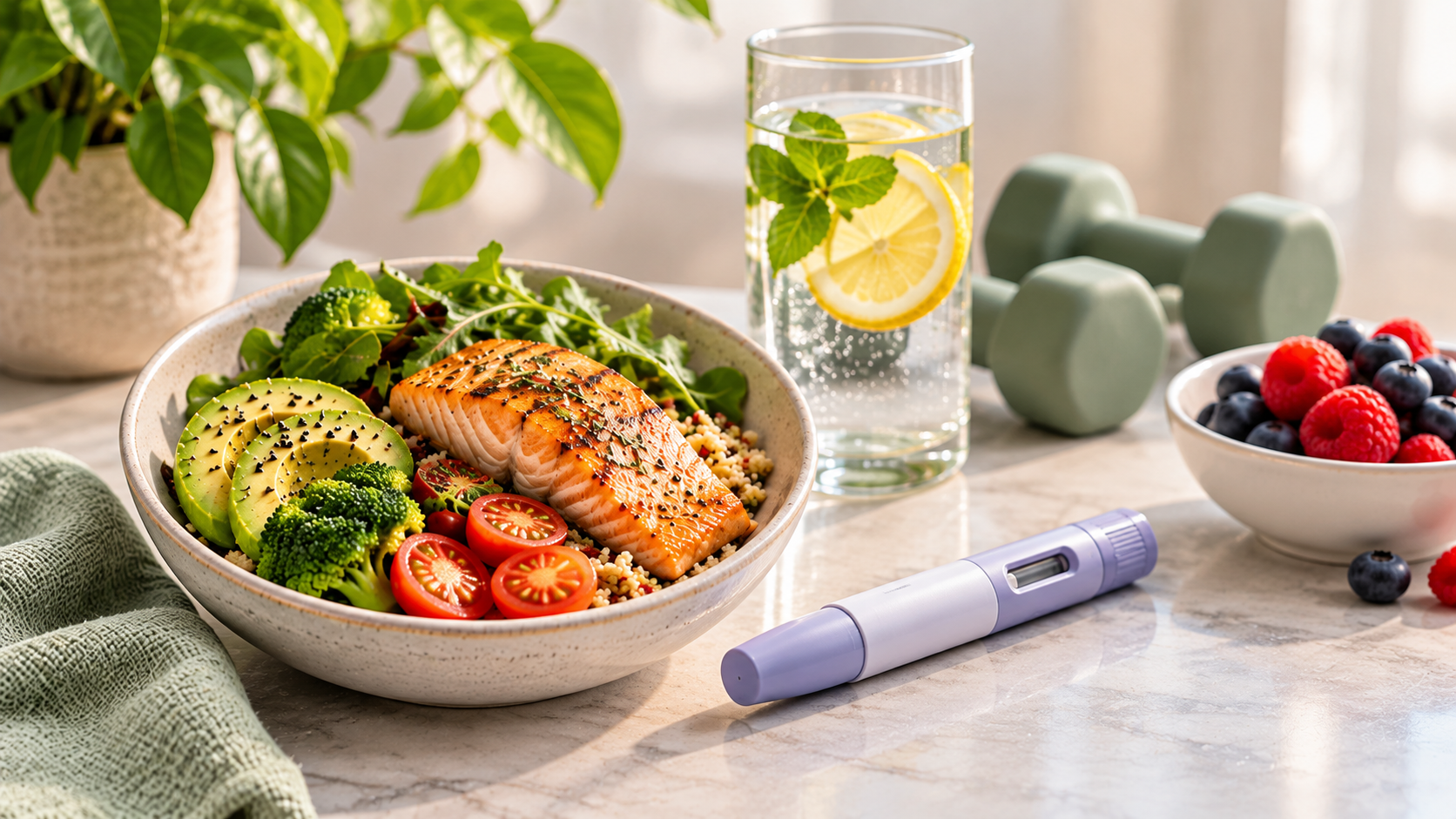
GLP-1 medications are changing lives. I see it every day.
People who have fought food noise for decades finally feel quiet. People living with inflammation and chronic weight struggles are seeing real progress. For many, it’s the first time food hasn’t felt like the loudest voice in the room.
Everyone comes to a GLP-1 for their own reasons. Some want to quiet constant cravings. Some are hoping to support their overall health. Some simply want relief from an appetite that never seemed to shut off.
But I’m noticing a shift that worries me.
As appetite fades, a lot of people are losing sight of something important:
Food is still medicine.
The medication changes how much you want to eat. It doesn’t change what your body needs.
Eating Less Isn’t the Same as Eating Well
Here’s what I hear more and more:
“I’m just not hungry, so I skip meals most days.”
“I only eat a few bites, so I might as well make them chips or dessert.”
“I can eat whatever I want now, as long as it’s small.”
I understand it.
When the hunger is gone, food can start to feel optional. But when you’re eating less, every bite carries more weight.
If those few bites are mostly processed snacks, sweets, or skipped meals, your body may not be getting the nourishment it needs to function at its best.
You can lose weight and still be undernourished.
The scale may go down while your energy, muscle, hair, skin, and mood quietly pay the price.
What Gets Missed
These are some of the gaps I see most often in clients on a GLP-1:
Protein
Without enough protein, it can be harder to maintain muscle while losing weight.
Muscle supports your strength, metabolism, balance, and overall health, especially as we move through midlife.
Fiber
Eating fewer vegetables, fruits, beans, and whole grains often means eating less fiber.
That can make constipation more difficult and may also affect digestive health.
Vitamins and Minerals
Smaller portions of less nourishing foods can make it harder to get enough important nutrients through your diet.
Depending on the individual, nutrients such as iron, B12, vitamin D, calcium, and magnesium may be worth discussing with your healthcare provider.
Fluids
When you’re eating less, you may also be taking in less fluid through food.
And when appetite cues feel different, it can be easy to forget to drink enough throughout the day.
The medication can quiet the noise.
It can’t choose your food for you.
That part is still up to you.
Food as Medicine on a GLP-1
You don’t need a perfect diet.
You need your smaller appetite pointed toward foods that do more for you.
Here’s where I start with clients:
1. Eat on a Rhythm, Not Just on Hunger
Your hunger cues may be quieter now, so don’t always wait until you feel hungry.
Aim for small, balanced meals at regular times throughout the day, even if your portions are smaller than they used to be.
2. Prioritize Protein
Start meals with a quality protein source such as:
Eggs
Greek yogurt
Chicken
Fish
Tofu
Beans
Cottage cheese
Protein can help support muscle, strength, and overall nourishment while you’re eating less.
3. Add Color
Try to include a vegetable or fruit with most meals.
It doesn’t have to be complicated.
Frozen vegetables count. A handful of spinach stirred into soup or eggs counts. Berries with yogurt count.
Small choices add up.
4. Make Every Bite Count
If you can only eat a little, start with the foods that give your body the most nourishment.
That doesn’t mean you can never enjoy dessert or your favorite snack.
It simply means nourishing foods come first.
5. Sip Throughout the Day
Keep a water bottle nearby and drink regularly instead of waiting until you feel thirsty.
Building hydration into your routine can make it much easier to stay consistent.
6. Talk With Your Provider About Labs
Ask your healthcare provider whether checking certain nutrient levels makes sense for you.
Depending on your individual needs, they may recommend bloodwork or discuss whether supplementation is appropriate.
Your Prescription Is a Tool. This Is the Plan.
A GLP-1 can give you a powerful reset.
But what you eat while you’re on it matters.
Nutrition can influence how you feel, how well you support your body during weight loss, and how prepared you are to maintain healthier habits long term.
The food noise is quiet now.
Use that space to listen to what your body actually needs.
Thrive With TLC
At Thrive with TLC, I coach clients through every stage of the GLP-1 journey:
Before you start: building healthy habits and a strong foundation
While you’re on it: supporting nutrition, protein intake, hydration, and lifestyle habits
After you stop: creating a sustainable plan to help maintain your progress
If you’re a TLC patient, your first injection visit includes a complimentary Coaching Kickoff.
If you’re not a patient yet, you can still work with me through nutrition and wellness coaching in South Tampa or virtually.
Ready to Build a Plan That Lasts?
Whether you’re considering GLP-1, currently using it, transitioning off, or focused on maintaining your progress, you don’t have to figure it out alone.
Let’s build a nutrition and wellness plan that supports your goals beyond the prescription.
This post is for educational purposes only and is not medical advice. Talk with your healthcare provider about your individual nutrition and medical needs while using a GLP-1 medication.